2023-05-01
How long does ptosis correction swelling last?
Learn about ptosis correction surgery, its benefits for tired-looking eyes, and how to manage swelling and scarring.

If you frequently hear comments like ‘You look sleepy’ or ‘You look tired’ even when you're not,
or if you're stressed by your dull-looking eyes, ptosis correction can help improve the situation.
However, before proceeding, it's important to check if you have ptosis.
Ptosis is a condition where the strength of the muscles that open the eyes is weakened due to congenital or acquired reasons, leading to the use of the eyebrows and forehead instead of the eye muscles to open the eyes.
If ptosis is not recognized and left untreated for a long time,
the period of using the forehead muscles lengthens.
This can lead to deep wrinkles on the forehead, even if not due to aging,
as you use your forehead muscles to open your eyes.
Once formed, wrinkles rarely disappear naturally,
making them a significant concern.
Furthermore, ptosis can cause the size of your eyes to gradually differ,
potentially leading to asymmetrical eyes. If the eyes remain droopy,
it can cause vision deterioration and astigmatism,
so caution is needed.
Ptosis correction surgery, aimed at improving these situations,
takes about an hour and is performed under local anesthesia.
After consulting with a specialist before the surgery,
the design is carefully considered, and the upper eyelid is incised
to pull up the eye-opening muscles, forming a new line.
Once these steps are completed,
the overall image is improved with clear and distinct eyes,
making it a highly satisfying surgical method.
You might be wondering if ptosis correction swelling will affect your daily life
before making a decision.
The swelling from ptosis correction varies depending on the surgical method:
incisional or non-incisional.
If ptosis correction is necessary, not just for the ptosis mentioned earlier,
the surgical methods can be broadly divided into incisional and non-incisional.
When performed with an incision, ptosis correction swelling
can be more severe than with non-incisional methods.
It is performed similarly to ptosis surgery, and even if you don't have ptosis,
if your skin is thick and fatty, or if wrinkles appear on your forehead when you open your eyes,
an incisional approach may yield better results.
While non-incisional ptosis correction can still cause swelling,
it is generally less severe compared to incisional methods.
Non-incisional ptosis correction surgery is performed by tying the inner eyelid muscles and the levator muscles without an incision.
There are almost no visible external scars, but it's a method that requires caution as it can damage eyelid tissue.
Additionally, if the skin is thick or fatty,
the effect may be minimal, so this method is recommended for those with thin skin and relatively less fat and muscle.
If you have thick or fatty skin but opt for a non-incisional method due to fear of ptosis correction swelling,
the tied part might loosen, causing the ptosis correction effect to disappear.
Rather than repeating the same surgery because of ptosis correction swelling,
it is advisable to find a method that suits your eye's characteristics,
even if it means a bit more swelling and a longer recovery period.

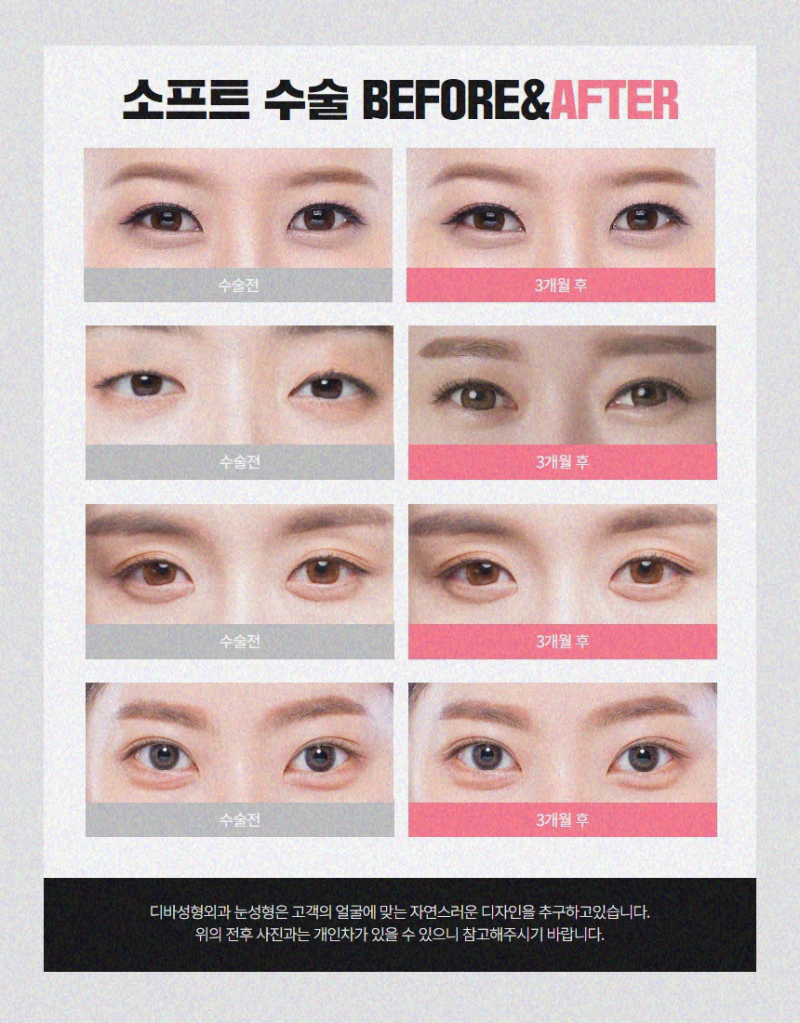
When opting for an incisional method, you might also worry about scarring along with ptosis correction swelling.
It's natural for incisional methods to show more scars than non-incisional methods,
but over time, the scars become almost invisible, reaching a state similar to non-incisional methods.
Therefore, choosing what suits your situation is even more important.
While continuing to worry about ptosis correction swelling and scars,
an important consideration before deciding on surgery is to be cautious when choosing a hospital.
In particular, you should prioritize and check the skill of the specialist at the hospital you visit.
Since not all procedures are performed with the same design,
and completely different designs can be created depending on the specialist's experience and skill,
and the degree of ptosis correction swelling and scarring can also vary,
it is necessary to verify this.

The shape of the eyes, as well as the thickness and shape of the eyelids,
and the degree of ptosis, vary from person to person.
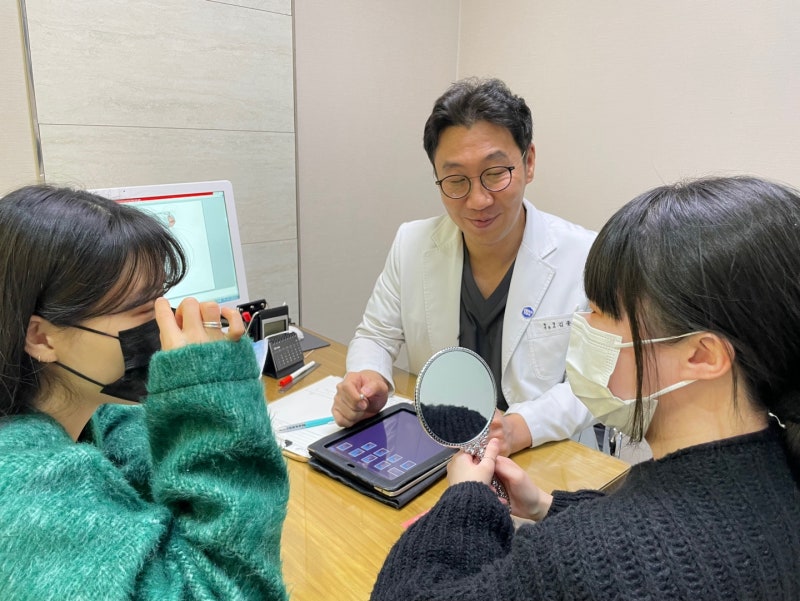
Through a skilled plastic surgeon who possesses anatomical knowledge and can also address aesthetic aspects,
you can achieve satisfactory ptosis correction results,
leading to a bright and radiant image with distinct double eyelids.
The reason for emphasizing caution when choosing a hospital and a plastic surgeon is that this method of correcting the eye shape has a different level of difficulty compared to general double eyelid surgery.
Ptosis correction is a complex surgery that involves touching the eye muscles,
so even a very small difference can lead to results such as the eyes being excessively open and not closing,
or being insufficiently open and looking sleepy, or asymmetrical eyes.
If these issues are observed after the ptosis correction swelling subsides, revision surgery will be necessary.
This is not simply a matter of undoing the procedure; it can worsen scars and prolong ptosis correction swelling.
Therefore, it is ideal to meet a skilled specialist once and undergo surgery with a method appropriate for you to prevent problems from arising.
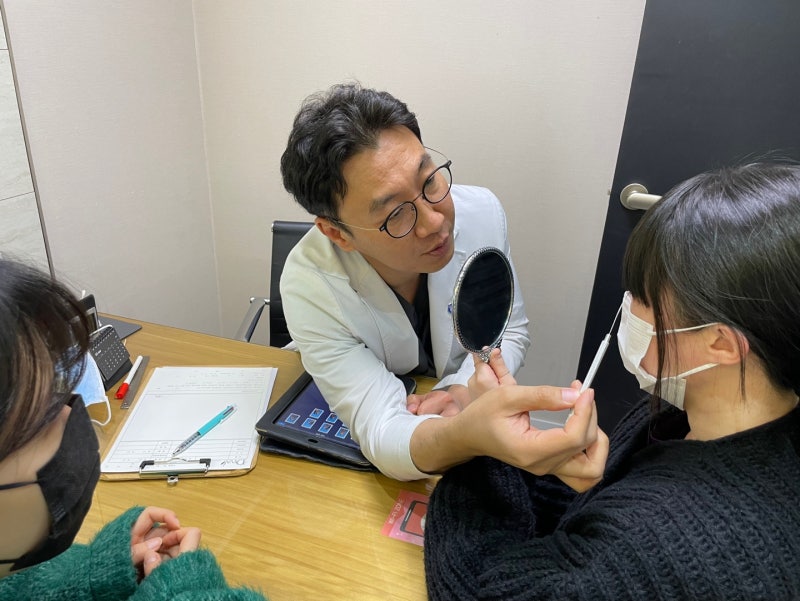
Large and clear eyes are an important factor in making a person's image appear bright and healthy.
If you've been stressed by sleepy and droopy eyes, you might want to improve them through surgery, even if you're concerned about ptosis correction swelling.
Rather than focusing on ptosis correction swelling and scars, it's better to check which hospital can provide professional services from consultation to diagnosis, surgery, and post-operative care.
Concerns about ptosis correction swelling and scars can be continuously managed at a hospital with good post-operative care, so you don't need to worry too much.
We live in a world where physical appearance is also considered a ‘spec’.
We hope you can overcome your stress through ptosis correction and gain an excellent ‘spec’.
** Please be informed that this post is a promotional post written by Diva Plastic Surgery in compliance with the Medical Advertising Act. **
Frequently Asked Questions
When is ptosis correction surgery necessary?
Yes, ptosis correction can be considered when you want to improve a sleepy or tired-looking impression, even when you're not. It may be particularly necessary if you have symptoms such as forehead wrinkles, asymmetrical eyes, or vision deterioration due to ptosis.
What types of ptosis correction surgery methods are there?
Ptosis correction surgery methods can be broadly divided into incisional and non-incisional methods. The incisional method is suitable for ptosis or when the skin is thick and fatty, while the non-incisional method is recommended for those with thin skin and less fat.
How severe are the swelling and scars after ptosis correction surgery?
Ptosis correction swelling can be more severe with the incisional method than with the non-incisional method. Scars from the incisional method may be visible initially, but over time, they become almost invisible, similar to the non-incisional method.
How long does ptosis correction surgery take?
Ptosis correction surgery usually takes about 1 hour and is performed under local anesthesia. The design is determined after thorough consultation with a specialist before the surgery.
How can I avoid revision surgery after ptosis correction?
To avoid revision surgery after ptosis correction, it is important to choose a surgical method that suits your eye's characteristics. Additionally, you should carefully select a skilled plastic surgeon with anatomical knowledge and aesthetic sense.
What kind of post-operative care is provided after ptosis correction?
Post-operative care after ptosis correction is an important consideration when choosing a hospital. At a hospital with good post-operative care, you can receive continuous care for concerns such as swelling and scars, so you don't need to worry too much.