2023-03-10
Double Eyelid Revision Surgery: Understanding the Causes of Initial Failure
Discover the common reasons why initial double eyelid surgeries fail, such as unnatural lines, scars, or functional issues, and learn how revision surgery can correct these problems for a more natural and attractive look.
Our eyes are one of the most important elements for living.
They not only provide us with vision to see the world but also play a significant aesthetic role as they are the first place our gaze goes when we face someone.
Perhaps that is why, recently, appearance is considered a part of self-care, and many people undergo double eyelid surgery or epicanthoplasty to achieve attractive eyes.
Furthermore, double eyelid revision surgery is not only performed to achieve beautiful eyes but also helps when there are functional problems due to conditions like ptosis.
As such, eye surgery is widely popular because it is utilized in various ways, both aesthetically and functionally.
However, it is important to note that eye surgery, despite its prevalence, is often not approached with the necessary caution, as people mistakenly believe it to be easy.
Consequently, even after undergoing surgery, people may experience awkward and unnatural results, scars, or other issues such as incorrect design.
It is disheartening to see negative outcomes due to side effects after a long-awaited surgery, which can lead to distress and a drop in self-esteem and confidence every time one looks in the mirror.
This diminished self-image can manifest as a lack of confidence in social situations, leading to negative impacts.
However, an initial failed surgery does not mean it cannot be rectified.
Through double eyelid revision surgery, it is possible to correct a failed eye surgery and achieve beautiful and attractive eyes.
For revision surgery, it is crucial to first analyze the cause of the initial failure.
The reasons for failure vary from person to person, and identifying the cause allows for appropriate corrective measures.
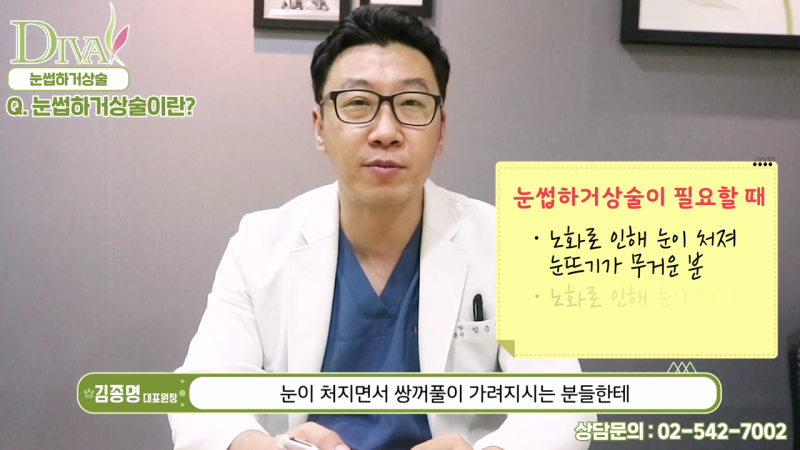
Common causes of failure include not removing the appropriate amount of fat correctly or creating an excessively thick line, often resulting in a ‘sausage-like’ appearance.
In such cases, during double eyelid revision surgery, the existing thick line must be released, and more fatty tissue removed to create a new line that suits the eyes.
Occasionally, double eyelids created with the non-incisional (suture) method may loosen over time, leading to asymmetrical eyes, necessitating revision surgery.
These cases occur when eyes that initially required an incisional method were forcibly tied with the non-incisional method, which does not provide permanent fixation, causing the line to loosen over time. Furthermore, some individuals who underwent surgery for droopy eyelids find that their condition has not improved as desired, and the drooping has deepened.
These individuals had symptoms of ptosis that were not accurately identified or corrected, leading to unsatisfactory results.
In such instances, additional eye correction can be performed through double eyelid revision surgery to achieve improvement.
Thus, double eyelid revision surgery can address a variety of cases.
The key is to analyze the cause of the initial failure, minimize tissue damage, thoroughly analyze the individual's eye structure and features, and perform revision surgery tailored to their facial features and shape. Especially for revision surgery, a dedicated surgeon handles everything from consultation to surgery, ensuring safety and trustworthiness.
Every process is delicate and thorough, with meticulous post-operative care provided to prevent recurrence or side effects, resulting in very high patient satisfaction after surgery.
Many people worry about scars after surgery. Here, even scars from the first double eyelid surgery are delicately removed and re-sutured, alleviating concerns about them. When undergoing plastic surgery for the first time, it is crucial to carefully consider and understand your facial features, choosing a place that proposes a design suitable for your face shape. However, even if the initial surgery fails, do not despair; instead, seek revision surgery to regain a beautiful line.
To expect successful revision surgery results, the timing of the surgery is also important.
It is best to address the problem after identifying it, but since it is a procedure that stimulates the skin, you should plan with the timing in mind.

If the line appears unnatural immediately after surgery, consulting within two weeks of the operation to undergo double eyelid revision surgery before the line settles is one option.
Typically, it is recommended to wait until the redness subsides and the scar softens, usually after 6 months, to minimize scarring and proceed with revision surgery.
If there is inflammation, it is helpful to wait until the inflammation has subsided.
To move beyond thick, unnaturally swollen eyes and achieve a natural, clear eye shape, we strive to deliver satisfactory results through thorough consultation with a dedicated surgeon, from the procedure process to post-operative care.

This is a place where a dedicated surgeon with extensive revision surgery experience directly consults and designs, allowing you to expect good results with natural eye shapes.
Considering even damaged tissues for double eyelid revision surgery, if you undergo a safe procedure, you can overcome the failure of the first surgery and expect a natural-looking line.
Even if you do not proceed immediately, please understand the current state of your eyes, consult about the best time and method for revision surgery, and then make your decision.
For any questions, please feel free to consult with us at our clinic before proceeding.
** Please be informed that this post is a promotional post written by Diva Plastic Surgery in compliance with the Medical Advertising Act. **
Frequently Asked Questions
In what cases is double eyelid revision surgery necessary?
Double eyelid revision surgery is necessary after an initial surgery results in unnatural or awkward eye lines, scars, design issues, loosened lines, asymmetrical eyes, or uncorrected ptosis. These problems can be improved through revision surgery.
What are the main causes of initial double eyelid surgery failure?
Key causes include failure to remove the appropriate amount of fat, leading to a thick line; the line loosening over time after a non-incisional (suture) method; or not accurately identifying and correcting ptosis symptoms.
When is the best time to undergo double eyelid revision surgery?
Generally, it is best to wait until the redness subsides and the scar softens, usually after 6 months, to minimize scarring and proceed with revision surgery. However, if the line is unnatural immediately after surgery, revision surgery might be considered after a consultation within 2 weeks. If there is inflammation, it should be done after the inflammation has subsided.
Can scars from the first surgery be removed during revision surgery?
Yes, it is possible. At our clinic, even scars from the first double eyelid surgery are delicately removed and re-sutured, alleviating concerns about scarring.
What kind of post-operative care is provided after double eyelid revision surgery?
We provide detailed guidance on post-operative care to prevent recurrence or side effects after revision surgery. A dedicated surgeon handles everything from consultation to surgery and post-operative care thoroughly, aiming for satisfactory results.