2023-04-01
Curious about the causes and cost of revision rhinoplasty?
Revision rhinoplasty is often needed due to implant issues like visibility or protrusion, inflammation, or contracture. It also addresses unsatisfactory aesthetic outcomes. Early consultation is crucial for minimizing problems.


Unlike in the past, times have changed,
and much of the aversion to plastic surgery has disappeared.
As it has come to be recognized as a form of self-care,
the barrier to entry for plastic surgery clinics has lowered.
The goals people seek through plastic surgery include
positive changes in appearance and increased self-confidence,
but at the same time, many people suffer from side effects,
making it necessary to consider carefully before proceeding.
Side effects and unsatisfactory designs
can turn what was started to gain confidence in one's appearance
into a source of stress and worry, rather than confidence,
tormenting individuals for a long time.
Rhinoplasty, in particular, often involves more
diverse side effects than other body parts,
leading to significant pain. Therefore, it is recommended
to achieve positive results with the first surgery through careful consideration.
Let's explore the issues that necessitate revision rhinoplasty
and consider how to avoid such situations.
First, common problems requiring revision rhinoplasty,
often referred to as typical rhinoplasty side effects,
include implant visibility and protrusion, inflammation, and contracture.
Additionally, even if the surgery was successful but the shape looks unnatural,
or if the design was satisfactory at the time but feels outdated later,
revision rhinoplasty can resolve the stress.
In such cases, if the medical institution provides systematic post-operative care,
one might revisit the original clinic to resolve the issue. However,
if trust has been lost due to the failure of the first rhinoplasty,
revision rhinoplasty cannot be performed there again.
It is, of course, essential to carefully examine the experience
and systematic approach of the medical institution and dedicated surgeon
when choosing where to have the initial surgery. However,
for revision rhinoplasty, the difficulty of the procedure increases,
making its importance even greater.

Since the nose is located in the center of the face,
it plays a significant role in forming a person's image
and also affects the three-dimensionality of the face.
Moreover, even if an attempt to change the nose through rhinoplasty
goes wrong,
it is a part that cannot be hidden or concealed,
and it must also faithfully perform its functional roles,
requiring an even more cautious approach.
Among those seeking revision rhinoplasty,
the most common side effect is
problems caused by implant visibility and protrusion
due to the implant not settling properly.
Although implants are made to be lightweight,
they are not naturally part of the body, which can lead to issues
due to their weight and foreign body sensation.
This can include cases where the implant slides down due to gravity
or shifts position due to external impact.
Since this occurs internally,
unless one observes very carefully,
a considerable amount of time may pass
before it becomes noticeable.
Therefore, if the implant has visibly shifted,
it has often already penetrated the skin,
making it possible that recovery to the original state
may be impossible even with revision rhinoplasty.
Since you are the one who can feel your own problems the fastest,
if you detect anything unusual, it is best to visit the clinic as soon as possible
and actively seek consultation for revision rhinoplasty early on.
This is the way to minimize the problem.
Symptoms such as visibility and protrusion
will be addressed by removing the implant and identifying the cause
before proceeding with revision rhinoplasty, so please keep this in mind.

Among the side effects of rhinoplasty, inflammation often
arises from various causes.
An implant, an alien substance
suddenly introduced into the skin,
can cause friction with the native skin.
If friction occurs continuously, not just occasionally,
the probability of inflammation developing in that area increases.
This friction can be caused by a significant external impact,
but it can also occur from inadvertently touching the nose,
so it is necessary to consciously avoid touching the nose.

Contracture, one of the causes of revision rhinoplasty,
is a well-known side effect that has even been an issue for celebrities.
When silicone implants used to heighten the nasal bridge
are perceived by our body as foreign invaders,
an inflammatory reaction can persist.
During this process, the skin contracts, causing the nose to gradually shorten
and the nasal tip to lift, resulting in an acquired 'pig nose' deformity.
This side effect is precisely what is known as rhinoplasty contracture.
When such symptoms appear, the severe external changes
attract a lot of attention from others.
While individuals themselves are already aware of the problem,
the continuous worries and questions from those around them
lead to even greater stress.
The method for revision rhinoplasty is also highly complex,
meaning it cannot be completed quickly, leading to prolonged suffering.
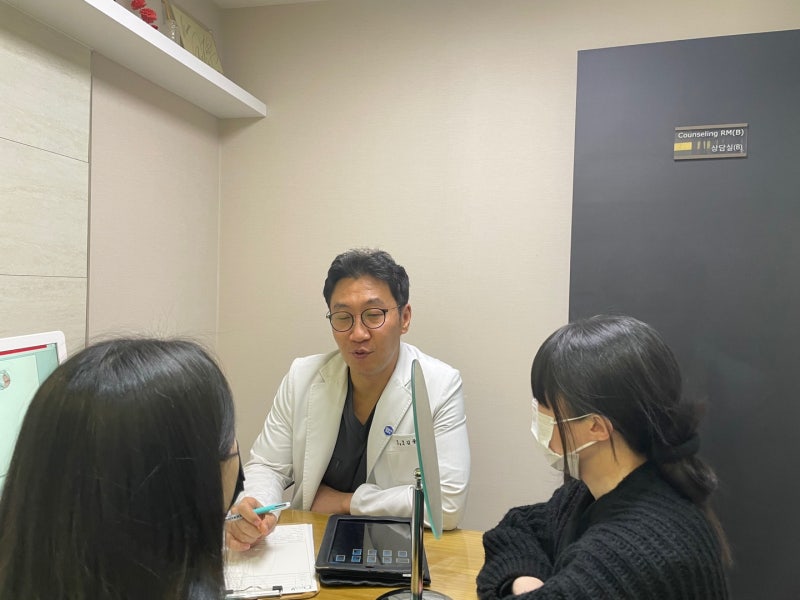
Although revision rhinoplasty to address nasal contracture
is performed at many medical institutions,
it is not an easy surgery,
making it challenging to find a skilled institution and medical team.
A medical team with extensive experience and expertise
must meticulously check both the exterior and interior using advanced equipment
and apply a method suitable for the patient.
Checking only the exterior visually carries a high risk of creating other problems,
so it is essential to examine the interior for an accurate diagnosis.
Those who have experienced failure in their first surgery
will likely be very concerned about how to successfully undergo revision rhinoplasty.
If you wish to achieve positive results through revision rhinoplasty,
it is crucial to find a medical team with abundant clinical experience and skills
above all else, so please make sure to check this aspect.
To perform revision rhinoplasty for issues like nasal contracture,
since the tissue is already deformed due to inflammation,
the hardened tissue must first be softened
before proceeding.
As it is a highly complex surgery, to avoid experiencing pain again,
from consultation to diagnosis, examination, and surgery,
and finally, detailed post-operative care,
please visit a trustworthy medical institution to undergo revision rhinoplasty
and reduce the likelihood of side effect recurrence.
** Please be informed that this post is a promotional post written by Diva Plastic Surgery in compliance with medical advertising laws. **
Frequently Asked Questions
What are the main reasons for needing revision rhinoplasty?
The main reasons for needing revision rhinoplasty include implant visibility and protrusion, inflammation, and contracture. Additionally, an unnatural shape after surgery or a design that feels outdated over time can also be reasons for revision surgery.
What is contracture after rhinoplasty?
Contracture after rhinoplasty occurs when the body perceives the silicone implant as a foreign substance, leading to a persistent inflammatory reaction. This causes the skin to contract, making the nose gradually shorter and the nasal tip to lift, resulting in an acquired 'pig nose' deformity.
What should I do if I suspect a problem with my nasal implant?
If you detect anything unusual with your nasal implant, it is crucial to visit a medical institution as soon as possible to receive early and proactive consultation for revision rhinoplasty. This is the best way to minimize the problem and prevent it from progressing to more severe side effects.
Is revision rhinoplasty more difficult than the first surgery?
Yes, revision rhinoplasty is generally more difficult than the first rhinoplasty. The tissue may already be deformed or damaged, requiring a more cautious and specialized approach, and the extensive experience of the medical team is crucial.
What is important when choosing a hospital for revision rhinoplasty?
When choosing a hospital for revision rhinoplasty, the most important factor is finding a medical team with abundant clinical experience and excellent skills. Additionally, you should select a trustworthy medical institution that provides detailed and systematic diagnosis, examination, surgery, and post-operative care.