2023-04-13
If Contracture Occurred as a Cause for Revision Rhinoplasty
Revision rhinoplasty is often needed due to contracture, an inflammatory complication where nasal tissue shrinks, leading to a shortened, upturned nose. Other reasons include unnatural designs, visible implants, or asymmetry. Choosing an experienced surgeon is crucial for successful correction.
The nose, located in the center of the face, plays a crucial role in breathing, smell,
and defining one's image. Rhinoplasty can bring about positive changes.
Along with the eyes, it is one of the most common areas people choose for plastic surgery,
and when the desired design is achieved,
satisfaction levels are often high.
However, even just typing ‘rhinoplasty’ reveals
a variety of potential side effects,
making it natural to feel a bit apprehensive.
If the rhinoplasty you bravely underwent for an image transformation
has led you back to the daunting challenge of revision rhinoplasty,
you likely feel overwhelmed.
Revision rhinoplasty is more complex than the initial surgery
and requires extreme caution. Therefore,
it is recommended to be even more careful when choosing a hospital than the first time,
and to find a meticulous and experienced specialist.
Various situations can necessitate revision rhinoplasty.
Sometimes, people follow trends or try to emulate the nose shape of a favorite celebrity,
resulting in a nose that is too high and appears artificial or unnatural,
leading them to desire revision surgery.
Trends always pass quickly.
While trends exist in rhinoplasty,
any trend only truly shines when it suits the individual.
Rather than simply aiming for a celebrity’s beautiful nose shape
or the currently popular line,
I want to emphasize the importance of designing the nose shape
to match your facial structure, the position of your features,
and the line flowing from your forehead,
to achieve overall balance.
In addition to the examples above, revision rhinoplasty is also sought
due to incorrect judgments,
which are quite common.
Sometimes, due to misjudging skin thickness,
the implant may show through thin skin.
Or, if the procedure was performed incorrectly,
the implant may not settle properly and move around,
leading to inflammation and pain.
Furthermore, a crooked nasal bridge
or asymmetrical nostrils may appear,
or the angle of the nasal tip may be awkward,
resulting in an imbalance with the face.
Such issues cause stress every time one looks in the mirror,
making revision rhinoplasty a necessity.
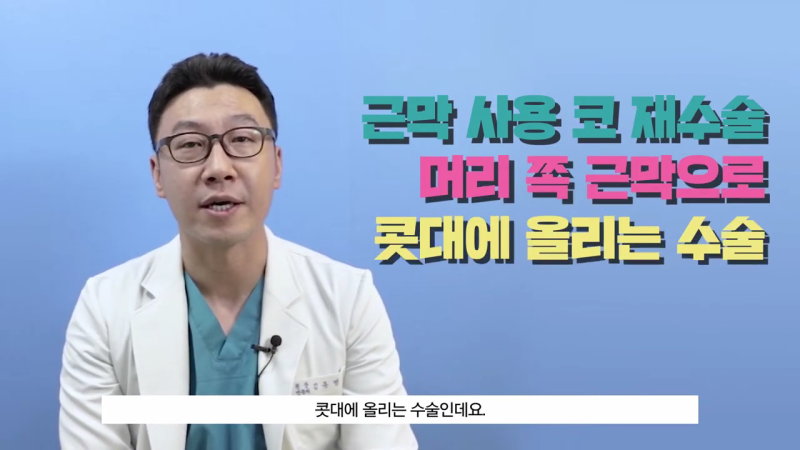
The most common complication leading to revision rhinoplasty is contracture.
You may have heard various celebrities on TV
discussing their struggles with rhinoplasty side effects and contracture.
Nasal contracture is the primary reason for revision rhinoplasty. It occurs when inflammation,
often caused by an implant, leads to changes in the nasal tissue and contraction of the skin tissue,
resulting in a shortened nasal tip that is pulled upwards,
creating an upturned nose appearance.
When patients present with this condition,
revision rhinoplasty is essential.
In cases of contracture at the nasal tip,
scar tissue must be released,
and the contracted, upturned nasal tip must be sufficiently lowered
to achieve an ideal result.
Since the overall length of the nose is shortened,
the focus should be on identifying the cause,
and there is a high probability that the internal silicone implant,
which is often the cause of inflammation,
will need to be removed.
At this point, if you do not find a specialist with anatomical knowledge
who can perform a systematic surgery,
you may have to undergo revision rhinoplasty two or three more times.
Therefore, please be more cautious in choosing a hospital
than you were for your first surgery.
Revision rhinoplasty methods vary
depending on the patient's condition.
While nasal contracture has been discussed,
many patients visit for other reasons. Therefore,
it is advisable to perform revision rhinoplasty based on a thorough diagnostic examination to identify the cause.
Even if there is no particular pain or inflammation,
some patients visit hoping for revision rhinoplasty because their nose is too high and feels awkward.
Since the shape of the nose has a strong aesthetic component,
this issue can also cause severe stress
to the individual.
When the nose is too high and feels awkward,
the line is designed considering the forehead and chin
to match the patient's facial proportions.
The existing implant is removed and replaced with a new one,
and autologous tissue is used at the nasal tip to enhance naturalness.
Since each patient desires a different design
and has a different nose shape,
consultation and examination with a specialist are of increased importance.
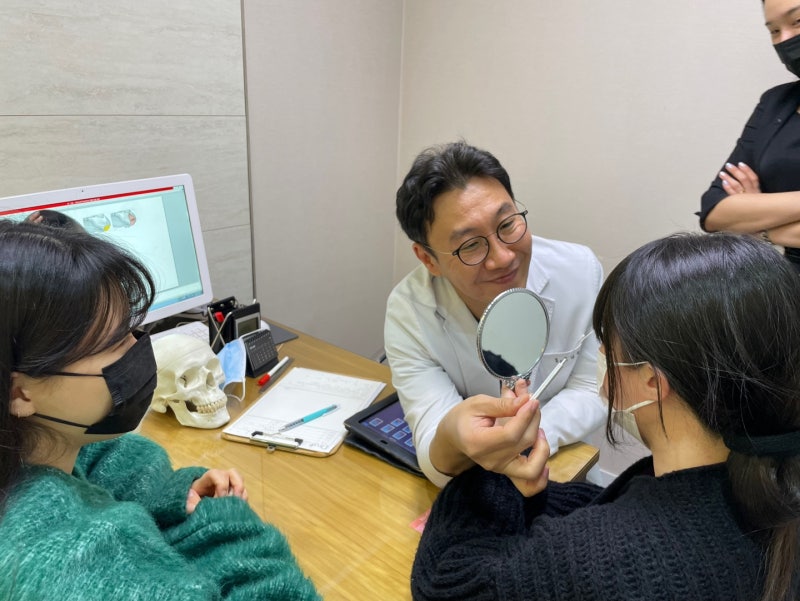
If the initial surgery was misjudged
and the implant was placed too high,
the implant may show through thin skin.
This problem can be resolved by lowering the implant during revision rhinoplasty
and changing the insertion space to be deeper than the capsule.
It is also important not to forget to use autologous dermis or scalp fascia
to compensate for thinned skin.
Sometimes, problems arise when the implant does not settle properly
and moves.
Implants that should be precisely positioned between the bone and periosteum
can become unfixed and move due to external impact or failure of the first surgery.
However, this can be corrected by properly fixing the implant to the periosteum
or reinforcing it through surgery,
so there is no need to worry.
And for those who are stressed by left-right asymmetry,
methods to correct the symmetry can be found.
So, instead of stressing alone at home,
it is recommended to visit a hospital for an examination.

While rhinoplasty can bring about positive changes in daily life,
it can also bring various problems
that may cause stress.
To avoid such situations,
as mentioned earlier,
when choosing a hospital and specialist,
it is important to check their experience, expertise, and system,
to make a clear decision
that prevents the need for a second or third surgery.
We hope you experience only positive changes
without side effects from rhinoplasty,
which can enhance the three-dimensionality of your face
and give you a clearer impression.
** This post is a promotional post written by Diva Plastic Surgery in compliance with medical advertising laws. **
Frequently Asked Questions
What are the main reasons for needing revision rhinoplasty?
Yes, there are various reasons for needing revision rhinoplasty. The most common cause is ‘contracture,’ where nasal tissue shrinks due to inflammation caused by an implant. Other reasons include unnatural designs from following trends, visible or moving implants, a crooked nasal bridge, or asymmetrical nostrils.
What is nasal contracture and how is it resolved?
Nasal contracture is a condition where inflammation, often caused by an implant, leads to the contraction of nasal tissue, resulting in a shortened, upturned nose. To resolve it, scar tissue is released, the upturned nasal tip is sufficiently lowered, and there is a high probability that the silicone implant, which is the cause of inflammation, will need to be removed.
How is the issue of a visible implant resolved during revision rhinoplasty?
Yes, the issue of a visible implant can be resolved. The existing implant is lowered for improvement, and the insertion space is changed to be deeper than the capsule. Additionally, methods such as using autologous dermis or scalp fascia can be employed to compensate for thinned skin.
What should be done if the implant moves during revision rhinoplasty?
Yes, if the implant moves, it can be resolved through surgery. The implant can be properly fixed to the periosteum or reinforced through surgery to ensure it is accurately positioned between the bone and periosteum, so there is no need to worry.
What is the most important factor when choosing a hospital for revision rhinoplasty?
Yes, revision rhinoplasty is more complex than the initial surgery, so careful consideration is needed when choosing a hospital. It is crucial to find an experienced specialist who can perform systematic surgery based on anatomical knowledge, and to check the hospital's experience and system.
Is revision surgery possible if the nose is too high and looks unnatural?
Yes, it is possible. If the nose is too high and feels awkward, the design is created considering the patient's facial proportions, forehead, and chin line. The existing implant is removed and replaced with a new one, and autologous tissue can be used at the nasal tip to enhance naturalness.