2022-11-28
Nose Tip Reduction: Achieving a Nose Shape That Suits You
Nose tip reduction can refine your nose for a more sophisticated look. This procedure, which involves reshaping the nasal tip cartilage, offers a quicker recovery and fewer side effects compared to other nose surgeries.


The nose, centrally located on the face, significantly influences a person's overall impression.
Its height, along with the shape and width of the nostrils, is crucial and greatly impacts the face's overall feel.
I believe you've sought out this article because you desire a nose tip reduction, even if your nose itself is already high.
Many people wish for a slightly smaller nose tip to achieve a more defined and prominent nose.
By subtly adjusting the nose shape, you can achieve a more sophisticated image and satisfactory surgical results through nose shape correction, which I believe makes it even more appealing.
Nose tip reduction is primarily a procedure to reduce the shape itself, rather than extensively altering the nose, so the recovery process and side effects are generally less severe compared to other surgeries.
Nose tip reduction involves tying the nasal tip cartilage. To explain in more detail, it involves making a small hole in the alar cartilage inside the nose, just enough for a thread to pass through, to reshape it.
This reshaping makes the nose tip more prominent, and if necessary,
a small implant may be inserted to subtly refine the nose tip shape.
Because it's a relatively simple nose tip reduction surgery, it carries less burden than full rhinoplasty, with very little bruising and swelling.
It also boasts the advantage of quick recovery, allowing for a rapid return to daily life.

Not only the alar cartilage but also the surrounding tissues are tied to prevent them from loosening later, ensuring a more secure fixation and preventing relapse.
Therefore, it's primarily chosen by those who desire a subtle nose surgery, and there are also individuals who have had previous nose surgery but come in for a simple procedure to further enhance their nose tip.
While some cases only require simple nasal cartilage correction, we sometimes recommend other surgeries for those who desire greater nose height, as this procedure typically doesn't involve large implants.
It's good to know that this surgery is designed for those with a blunt, wide nose, so it's mainly chosen by individuals concerned about their nose tip.
For example, for those with an upturned nose or a bulbous nose, we combine nose tip reduction with a small implant to establish the center of their face.
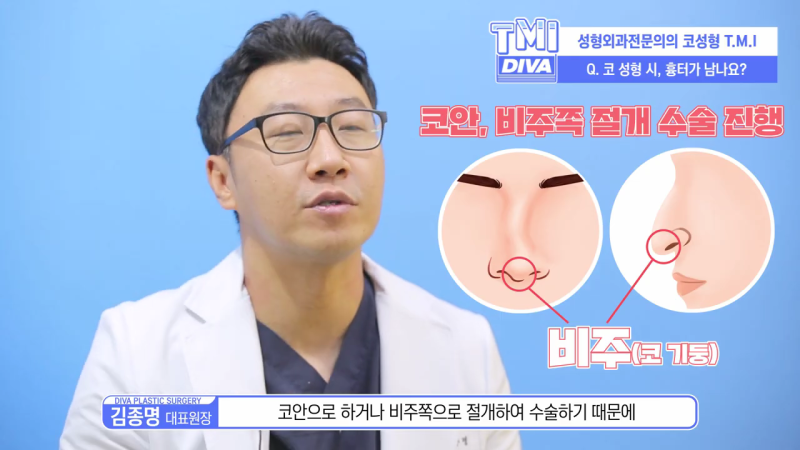
I understand that many of you have concerns about implants being placed inside your body, especially on your face, and undergoing surgery.
You're likely very worried about whether the implant used for nose tip reduction is safe, and if there's a risk of tissue necrosis as a side effect, making you hesitate about whether to proceed with the surgery.
To minimize these concerns, it's advisable to check various reviews and the clinical experience of the medical staff.
This is because you shouldn't experience external scars or discomfort from side effects after a surgery performed to enhance your beauty.
At our clinic, we strive to alleviate our patients' concerns, even minimally, through years of consultation and surgery,
and we also endeavor to ensure patients experience less discomfort during the recovery process.

At our clinic, we recommend using autologous cartilage for those concerned about nose tip reduction.
This is because if other artificial implants are used, the nose is a very sensitive area with many nerve systems,
which can lead to frequent inflammation and side effects.
You might be curious about which part of the body is used for autologous cartilage. At our clinic, we utilize septal cartilage or ear cartilage.
Surgeries performed with one's own cartilage are carefully done to minimize scarring,
and side effects are significantly reduced, leading to high patient satisfaction.
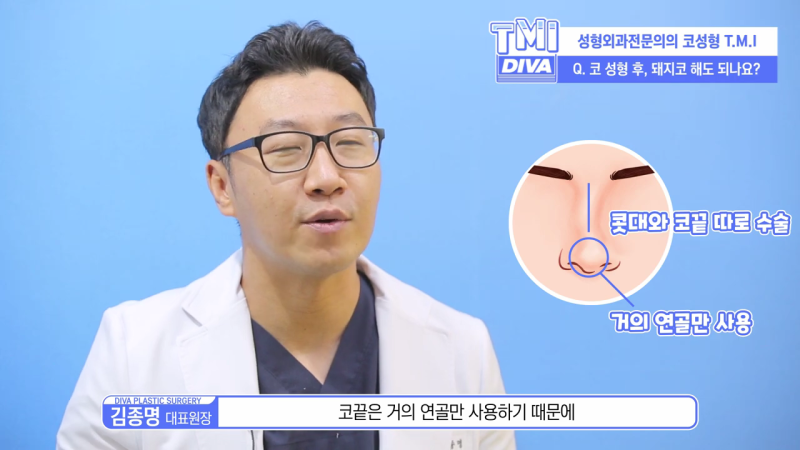
During the surgical process, creating a nose shape that harmonizes with the overall facial proportions is, of course, the most crucial aspect.
We pay great attention to ensuring the nose line and shape look natural, not obvious, and satisfy the patient.
Although I've described it as a simple procedure, there are cases where an implant needs to be inserted into the same nasal area,
so even for the limited area of the nose tip, it can be considered a surgery of a certain difficulty level.

If the numerous nerves in the nose are accidentally damaged, side effects such as numbness in the nose can occur,
and problems with the nose's function itself can arise.
Therefore, at our clinic, we thoroughly consider the patient's overall nasal condition, as well as structural and functional aspects,
to perform systematic and meticulous surgery.

While a first surgery might be somewhat straightforward, surprisingly, many individuals seeking help for nose-related concerns like nose tip surgery have had previous revision surgeries.
Revision surgery is more complex, so unless you are truly dissatisfied or have a problem that necessitates it,
we generally do not recommend undergoing plastic surgery again.
If revision surgery is unavoidable, I would advise you to seek out medical professionals who are highly experienced and have performed a wide variety of cases,
and who possess extensive expertise.
As this surgery focuses on aesthetic aspects, you're likely very concerned about safety and side effects.
That's why you're probably looking through various articles like this, and your mind might be racing about how to proceed.
Beyond nose tip reduction, there are many different nose surgeries and procedures available,
so I recommend choosing the surgery or procedure that best suits you and your condition.

I hope you achieve a happy outcome with a design that suits your improved appearance.
Rather than worrying alone, I suggest you go for a direct consultation and review various case examples
to decide whether to proceed with the surgery.
Don't be too scared; feel free to visit us for a comfortable, no-pressure consultation.
Frequently Asked Questions
How is nose tip reduction surgery performed?
Nose tip reduction is performed by tying the alar cartilage inside the nose with a thread to reshape it. If necessary, a small implant can be inserted to make the nose tip more prominent.
How long is the recovery period after nose tip reduction surgery?
Nose tip reduction surgery involves very little bruising and swelling compared to other nose surgeries, allowing for quick recovery. Therefore, it has the advantage of enabling a relatively rapid return to daily life.
What type of implant is used for nose tip reduction surgery?
At our clinic, we recommend using autologous cartilage whenever possible. Septal cartilage or ear cartilage is primarily used, which helps reduce frequent inflammation and side effects that can occur with artificial implants.
In what cases is nose tip reduction surgery suitable?
Nose tip reduction surgery is primarily suitable for individuals concerned about a blunt, wide nose tip. For example, people with an upturned nose or a bulbous nose can benefit from it when they want to improve their nose tip to be more prominent.
Is revision nose tip reduction surgery possible?
Yes, revision surgery is possible. However, revision surgery is more complex, so if it is unavoidably necessary, it is important to receive it from medical professionals who are highly experienced and have extensive surgical expertise from various cases.
What should I be aware of during nose tip reduction surgery?
The nose contains numerous nerves, and if they are accidentally damaged, problems with the nose's function can arise. Therefore, it is crucial to choose a medical institution that thoroughly considers the patient's overall nasal condition, as well as structural and functional aspects, to perform systematic and meticulous surgery.