2022-08-26
Why You Should Check Implants for Revision Rhinoplasty
Revision rhinoplasty is more challenging than the initial surgery, requiring careful consideration of the causes of failure, current condition, functional aspects, and aesthetic balance. This article discusses important factors for revision rhinoplasty, including choosing the right hospital and understanding different types of implants, especially autologous tissues.
Plastic surgery, especially a second attempt, can be more daunting and challenging than the first.
Most revision surgeries are more complex and require greater caution to correct previous mistakes
and meet the patient’s needs.
Therefore, revision plastic surgery should be performed by a meticulous and experienced specialist.
Revision rhinoplasty, in particular, demands even greater care because it requires accurately identifying
and diagnosing the cause of failure and the current condition, while also considering the nose’s functional aspects
and its aesthetic balance with the entire face.
So, how should one prepare for revision rhinoplasty?
Let’s explore the precautions for revision rhinoplasty and
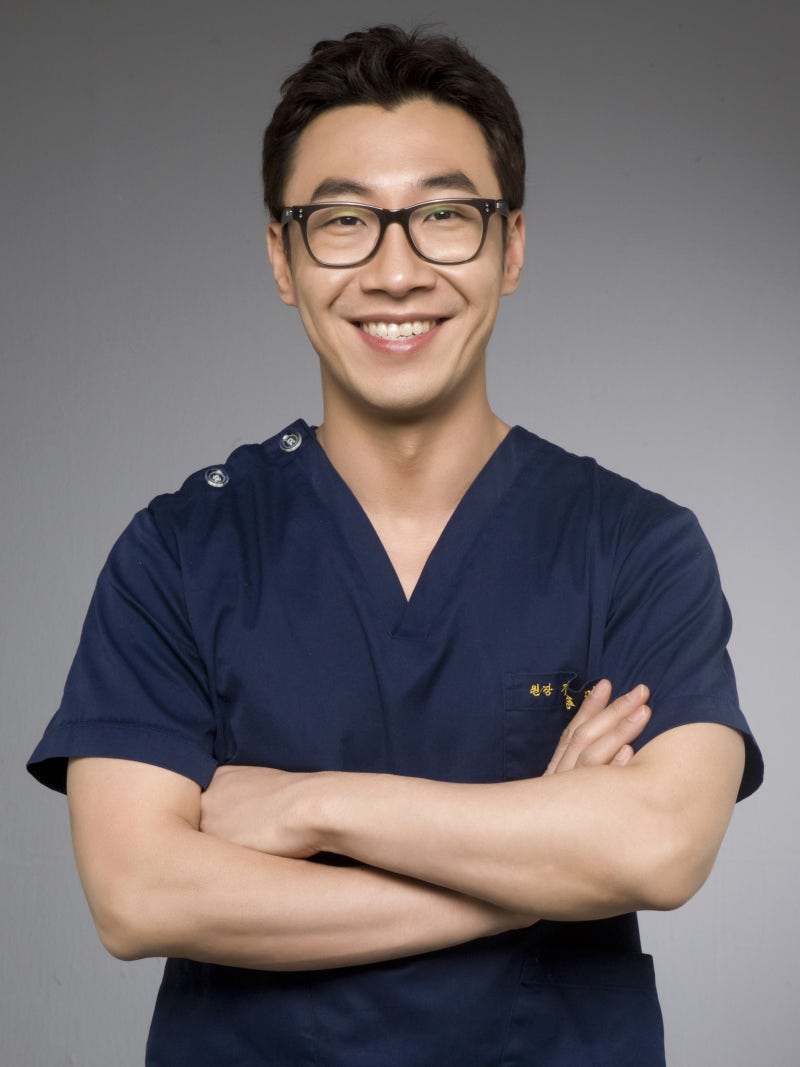
the implants used in revision rhinoplasty with Dr. Kim Jong-myung of a plastic surgery clinic.
As beauty standards shift from extravagance to naturalness,
inquiries about revision rhinoplasty are increasing.
What criteria should I use to choose a plastic surgery clinic for nose surgery?
When deciding on a hospital for revision rhinoplasty, you should check:
Is it a hospital that can correctly correct a contracted or deformed nose due to various side effects?
Is it a hospital capable of performing customized revision rhinoplasty based on the type of side effect?
Is it a hospital where an experienced and knowledgeable plastic surgeon resides and provides responsible care?
Is it a hospital that provides systematic 1:1 customized care, including post-operative management?
You must check these points.
Check your implants before nose surgery.
Furthermore, since there are cases where implant insertion is unavoidable,
it is also good to check the implants used in nose surgery.
Various implants are used in rhinoplasty. They can be broadly divided into artificial implants and
autologous tissue implants. Recently, there has been a growing preference for
autologous tissue implants, which have fewer rejection reactions and can safely maintain a beautiful nose shape for a long time.
Autologous tissue rhinoplasty refers to
a nose surgery where suitable autologous tissue is selected, harvested from the chosen area,
and then meticulously sutured.
This involves designing the shape of the autologous implant to fit the surgical site,
incising and dissecting the surgical site, and then implanting the autologous tissue.
Autologous tissue nose implants use one’s own tissue to create a sophisticated nasal bridge and
line, provide a soft feel to the nose,
form a natural shape without a foreign body sensation,
and have the advantage of a low risk of inflammation or pain, with minimal shape change even from external impact.
It can be used in a wide range of cases, such as when the nasal tip is round and blunt, when the nostrils are wide and the nasal tip is flat and spread out,
when the skin tissue and fat are thick, when the nasal tip width is relatively wider than the nasal width,
when the nasal tip is short, or when there is an aquiline nose.
Types of Autologous Tissue Implants for Rhinoplasty
Autologous Dermis
Dermis is harvested from the thickest part of the buttocks, below the tailbone.
Autologous dermis is the thickest and most elastic, so its shape does not spread sideways,
and once the dermis takes root, there is no deformation of the nose.
Septal Cartilage
This is an autologous tissue material primarily used to build the pillar of the nasal tip,
as it is a plate-like cartilage located between the two nostrils.
Ear Cartilage
Softer than septal cartilage and having a curved shape,
this material is used to create a natural shape for the nasal tip.
Rib Cartilage
Used to create a more prominent and sophisticated nasal tip, or when septal cartilage is small and insufficient,
or in cases of contraction. Autologous rib cartilage is harvested, or
cadaveric rib cartilage may also be used.
Temporal Fascia
Used to improve issues such as the implant appearing angular or severely visible after surgery.
Wrapping the implant with fascia can give a softer and
fuller feel.
Autologous Fat
Fat is harvested from the abdomen or thighs to raise a low nasal bridge, or
can be additionally injected into sunken or deficient areas without removing existing silicone after surgery.
If you are still not reassured after checking the above points,
it is advisable to choose a hospital that maintains a personalized diagnostic, design, and management system,
a hospital where a sterile disinfection management system is in operation, ensuring the safety of surgical tools and management equipment,
a hospital that accurately reflects various information such as the patient’s medical history and surgical history to safely manage the anesthesia system,
a hospital equipped with a monitoring system that transparently discloses the surgical process,
and a hospital that also considers recovery management systems, such as swelling management, bruising management, and pain management after surgery.
However, the most important thing is
to meet a plastic surgeon with extensive anatomical knowledge, aesthetic sense, and experience in nose surgery.
[Diva Plastic Surgery Consultation & Inquiries]
Phone ☎ 02-542-7002
KakaoTalk ID @디바성형외과 (https://pf.kakao.com/_igxaLl)
Homepage >> http://www.diva-ps.com/
Under-eye Anti-aging Surgery >> http://www.diva-ps.com/eyeunder/
Nose Slim Edition >> http://www.diva-ps.com/noseslim/